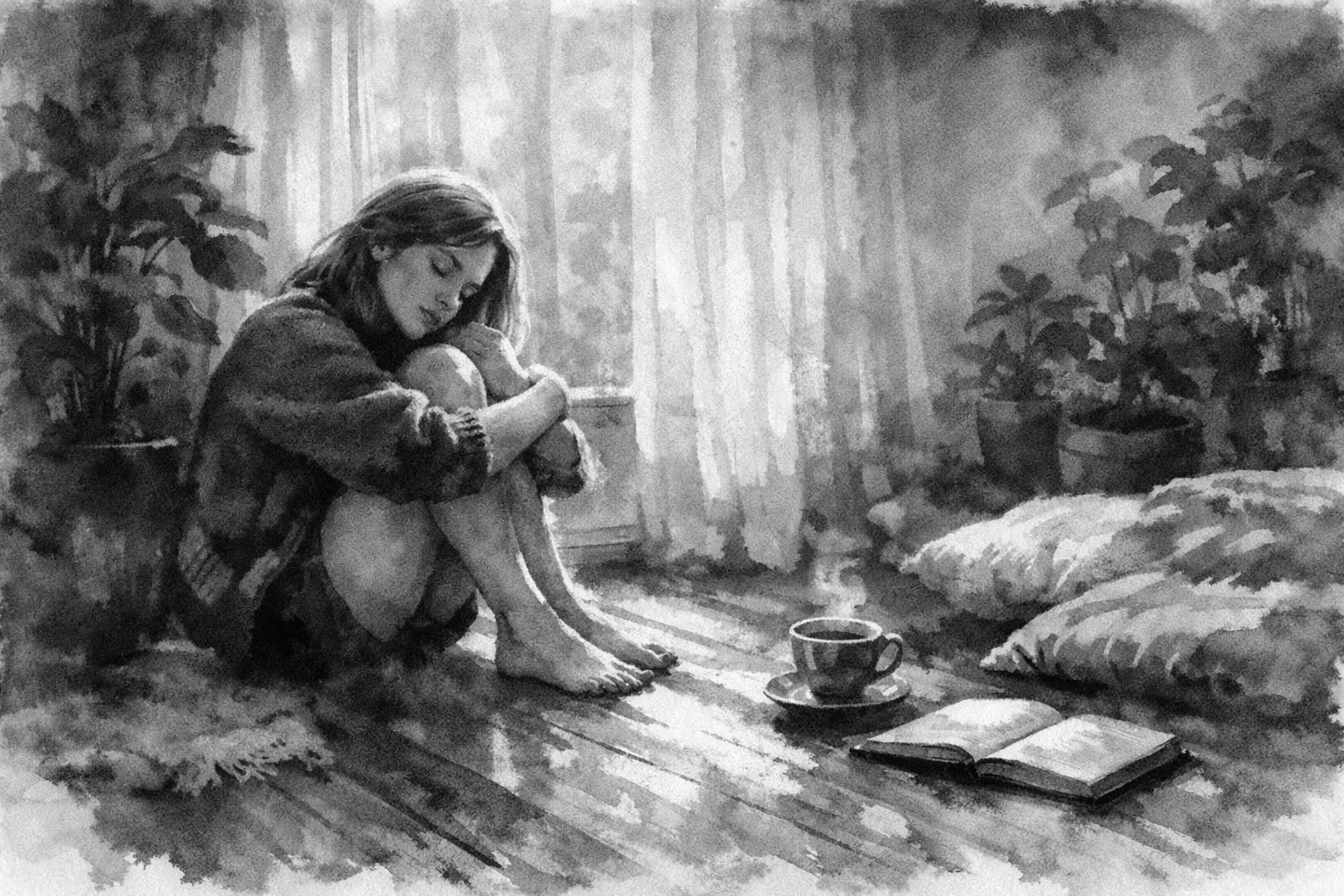
Quick Answer: If you’re an empath or highly sensitive person who feels worn out by the people, places, and energy around you, you’re not broken. Environmental drain is real, and it happens when your nervous system absorbs more than it can process. The good news? Small, intentional changes to how you manage your space and energy can make a genuine difference.
Key Takeaways
- Feeling drained by your environment is a common experience for empaths and highly sensitive people (HSPs)
- Your sensitivity is not a flaw — it’s a trait that comes with both challenges and real strengths
- Physical spaces, social situations, and even digital environments can deplete your energy
- Setting limits (not just “boundaries”) is one of the most practical tools you have
- Rest and solitude aren’t luxuries for sensitive souls — they’re necessities
- Small environmental tweaks can lower your baseline stress significantly
- You don’t need to fix yourself; you need to support yourself
What Does It Mean to Feel Drained by Your Environment?
Feeling drained by your environment means your surroundings — the noise, the energy, the people, the clutter — are pulling more from you than you’re getting back. For empaths and HSPs, this isn’t just tiredness. It’s a full-body depletion that can feel like you’ve been running on empty for days.
You walk into a crowded grocery store and leave feeling like you ran a marathon. You spend an hour with a stressed-out friend and carry their anxiety home with you. You sit in a messy room and can’t think straight. Sound familiar?
This is the lived experience that Feeling Drained by Your Environment? A Self-Help Guide for Sensitive Souls is really about — not just naming the problem, but actually doing something about it.
Why Are Empaths So Affected by Their Surroundings?
Empaths and HSPs process sensory and emotional information more deeply than most people. Research by Dr. Elaine Aron, who first described the Highly Sensitive Person trait in the 1990s, suggests that roughly 15–20% of the population has a nervous system that processes stimulation more intensely (Aron, 1996).
That means:
- Noise hits harder. A loud restaurant isn’t just annoying — it’s overwhelming.
- Other people’s emotions feel contagious. You pick up on tension, sadness, or anxiety without anyone saying a word.
- Clutter and chaos create internal noise. Your outer world mirrors your inner one, whether you want it to or not.
- Transitions take longer. Moving from one environment to another requires a kind of emotional reset that most people don’t need.
This isn’t weakness. It’s just how your system works. And once you understand that, you can start working with it instead of against it.
What Environments Are Most Draining for Sensitive People?
Not all environments drain empaths equally. Some of the most common culprits include:
| Environment | Why It’s Draining |
|---|---|
| Crowded public spaces | Sensory overload from noise, movement, and emotional energy |
| Toxic workplaces | Chronic stress from conflict, negativity, or high pressure |
| Cluttered or chaotic homes | Visual noise that keeps the nervous system on alert |
| Social media and news | Constant emotional input with no natural endpoint |
| Relationships with energy vampires | One-sided giving that leaves you depleted |
The tricky part? Sometimes we don’t realize which environment is draining us until we’re already running on empty.
How Can You Protect Your Energy Without Isolating Yourself?
This is the question I used to wrestle with constantly. Because the answer isn’t to hide from the world — it’s to build a relationship with your own limits.
Here are some practical steps that actually help:
- Name what drains you. Keep a simple journal for one week. After each situation, rate your energy from 1–10. Patterns will show up fast.
- Create a recovery ritual. After draining situations, give yourself 20–30 minutes of intentional quiet. No phone, no input. Just stillness.
- Redesign your physical space. Soft lighting, natural textures, and reduced clutter genuinely calm a sensitive nervous system.
- Set time limits on draining interactions. You’re allowed to say, “I can stay for an hour.” Full stop.
- Practice the pause. Before agreeing to anything, say “let me check my schedule.” This gives you space to feel into whether you actually have the energy.
“You don’t have to attend every event you’re invited to. Your energy is not a renewable resource that refills automatically.”
What Are the Signs You’re Environmentally Overwhelmed?
Catching overwhelm early makes recovery so much easier. Watch for these signs:
- You feel irritable for no clear reason
- Small things set you off more than usual
- You’re craving solitude but can’t seem to get it
- Your body feels heavy or achy without physical cause
- You’re emotionally flat, even in situations that usually bring you joy
- You’re sleeping more but still waking up tired
These aren’t signs of failure. They’re signals. Your system is asking for something. The question is whether you’re listening.
Conclusion: A Self-Help Guide for Sensitive Souls Starts With Self-Compassion
Feeling Drained by Your Environment? A Self-Help Guide for Sensitive Souls isn’t about becoming less sensitive. It’s about learning to honor what your sensitivity is telling you.
Start small. Pick one thing from this guide — just one — and try it this week. Maybe it’s a 20-minute quiet ritual after work. Maybe it’s moving your desk away from the window that faces a busy street. Maybe it’s finally saying no to that weekly obligation that leaves you hollow.
You don’t have to overhaul your entire life overnight. Sensitive souls thrive with gentleness, and that includes being gentle with your own pace of change.
You’re not too much. You’re not broken. You’re just wired differently — and that’s something worth taking care of.
FAQ
Q: Is feeling drained by your environment the same as being introverted? Not exactly. Introversion is about how you recharge (alone vs. with others). Environmental drain for empaths involves absorbing emotional and sensory input from surroundings, which can affect both introverts and extroverts.
Q: Can you become less sensitive over time? Sensitivity is largely a trait, not a habit. What changes is how well you manage it. With practice, you can reduce the impact of draining environments without losing your sensitivity.
Q: How long does it take to recover from environmental overwhelm? It varies. For mild drain, 30–60 minutes of quiet can help. For deeper depletion, you may need a full day or more of low-stimulation rest.
Q: Is it selfish to limit time with draining people? No. Protecting your energy so you can show up fully for the people and things that matter is responsible, not selfish.
Q: What’s the fastest way to reset after an overwhelming environment? Step outside, breathe slowly, and remove yourself from the stimulation. Even five minutes in fresh air can begin to lower your nervous system’s alert level.
Q: Should empaths avoid all stressful environments? Not always possible, and avoidance alone doesn’t build resilience. The goal is to manage exposure, recover well, and build environments that support you at home.
References
- Aron, E. N. (1996). The Highly Sensitive Person: How to Thrive When the World Overwhelms You. Broadway Books.